
Regenerative, Sustainable, Eco-Tourism: What These Words Actually Mean — And Why It Matters Before You Book
A Travel Advisors explanation of what Regenerative, Sustainable & Eco-tourism actually mean.
Rick Brazil - Travelers Roam
4/10/20264 min read
You've seen them everywhere. Eco-lodge. Sustainable retreat. Regenerative travel. Splashed across hotel websites and Instagram captions until they blur together into one feel-good mush.
They're not the same thing. And if you're the kind of traveler who actually cares where your money goes, the difference matters.
I specialize in archaeological, cultural, and regenerative travel. If that last word is going on my website, I owe you a real explanation, in my opinion, of what it means — and what it doesn't.
The three terms, plain and simple
Think of it as a ladder.
Eco-tourism is the ground floor. Travel to natural areas that tries to minimize harm and educate visitors. A jungle lodge running guided birdwatching walks and asking you not to touch the coral? That's eco-tourism. Good — but "eco" doesn't require much beyond operating in a natural setting without actively wrecking it.
Sustainable tourism is the next step. Solar power. Rainwater catchment. Local sourcing, fair wages, no single-use plastics. A sustainable property is trying to leave the place roughly how it found it. That's a meaningful commitment — it's the bar most well-run eco-lodges are actually reaching for.
Regenerative tourism is a different thing entirely. It doesn't just reduce harm — it leaves a place measurably better than before you arrived. Healthier reefs. More trees. Stronger local economies. The metaphor: sustainable travel tries to break even. Regenerative travel tries to make a deposit.
A genuinely regenerative property can answer a question most can't: What is thriving here now that wasn't before we started?
Why this matters
A lot of what gets marketed as "regenerative" is really just sustainable. And a fair amount of "sustainable" is ordinary hotel branding with some plants out front. The travel industry has figured out that conscientious travelers will pay more for a good story — and not every story holds up.
That's not a reason to be cynical. It's a reason to ask better questions.
When a property calls itself regenerative, here's what to look for:
Measurable outcomes. Hectares reforested. Sea turtle hatchlings released. Wages above the regional average. If they can't give you numbers, be skeptical.
Community ownership or real partnership. Regenerative work isn't something a foreign-owned hotel does to a community. It's work done with one — often with locals in ownership or leadership.
Certifications, used carefully. B Corp is the hardest to fake. Other certifications range from rigorous to pay-to-play. Certification alone isn't proof, but its absence on a property making big claims is a yellow flag.
Time. Regeneration is slow. Properties that have been doing this for a decade and can show you what changed are the real deal. Properties that started using the word last year — right when it got trendy — deserve more scrutiny.
Am I guilty of false advertising?
I asked myself that before putting "regenerative" on my website. Here's my honest answer: no — but only if I'm careful.
My rule: I use regenerative travel to describe a philosophy and the specific properties I vet, not as a blanket label for every hotel on every itinerary. In parts of Belize, Guatemala, and southern Mexico, there are genuinely regenerative properties I can send you to, and I'll tell you exactly what they're doing and why. In other regions, the best available option is sustainable or eco-certified — and I'll tell you that too.
What I won't do is slap "regenerative" on an itinerary because it sounds good. If it's sustainable, I call it sustainable. If it's just a lovely boutique hotel with no meaningful environmental program, I'll say that and we'll decide together if it's right for your trip.
You deserve that honesty. And honestly? You're going to fact-check me anyway — as you should.
What it actually looks like on the ground
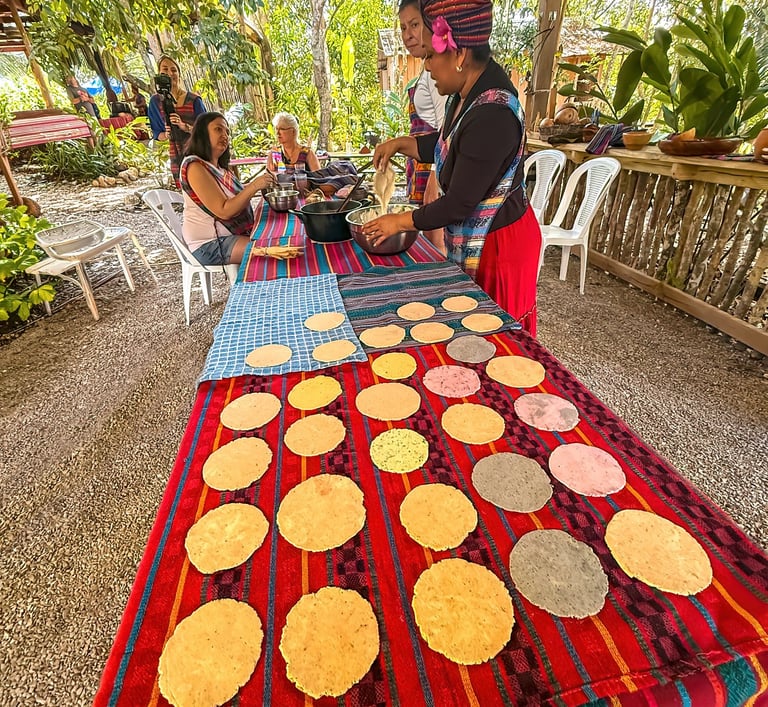
Regenerative travel shifts the trip from consumption to participation. A local guide whose family has lived in the region for generations, whose fee goes directly to his community — not a driver shipped in from the capital. A lodge where the food was grown on property by people who own a stake in it. Shoulder-season timing so your dollars land when a community needs them most. Smaller group sizes so the cenote or temple you visit isn't overwhelmed.
None of this means sacrifice. The trips I plan are comfortable, well-paced, and logistically tight. Regenerative travel and genuinely great travel are the same thing. The difference is where the value flows when you get home.
The bottom line
If someone's throwing around "regenerative" without telling you what's being regenerated, how, by whom, and with what measurable result — push back. Ask the question. The operations doing real work will light up, because almost nobody asks.
If you want an advisor who'll give you a straight answer about which properties are truly regenerative, which are solidly sustainable, and which are just beautiful hotels in beautiful places — that's exactly what I do.
Ready to plan a journey that actually means something? Let's talk.





Contact
Lets Get Social
+1-949-880-8237
rick@travelersroam.com
© 2026 Travelers Roam | Archaeological & Regenerative Small-Group Travel. An Independent Affiliate of A. S. A. P. Cruises Inc., Florida Seller of Travel No. FST ST15578 – California Seller of Travel No. 2090937-5 Washington UBID No 603189022